Your Next LLM Can Train a Million Tokens on a Gaming GPU
Your Next LLM Can Train a Million Tokens on a Gaming GPU
A solo researcher just published an architecture that claims to push trainable sequence length from 20K to 700,000 tokens on a single 16GB GPU. If that number holds up, the compute moat protecting long-context frontier labs gets a lot shorter. Sit down before you call your board.
What happened
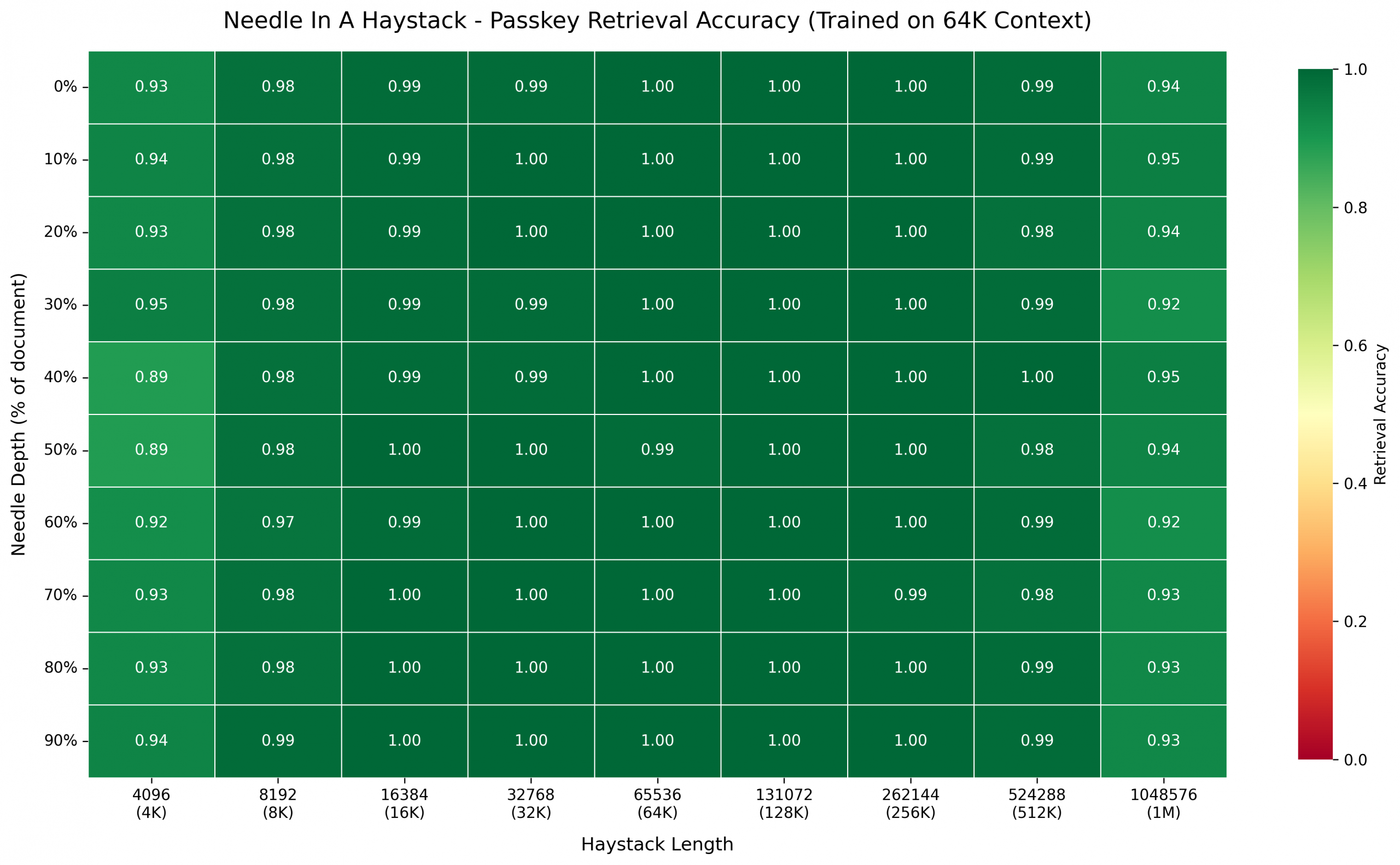
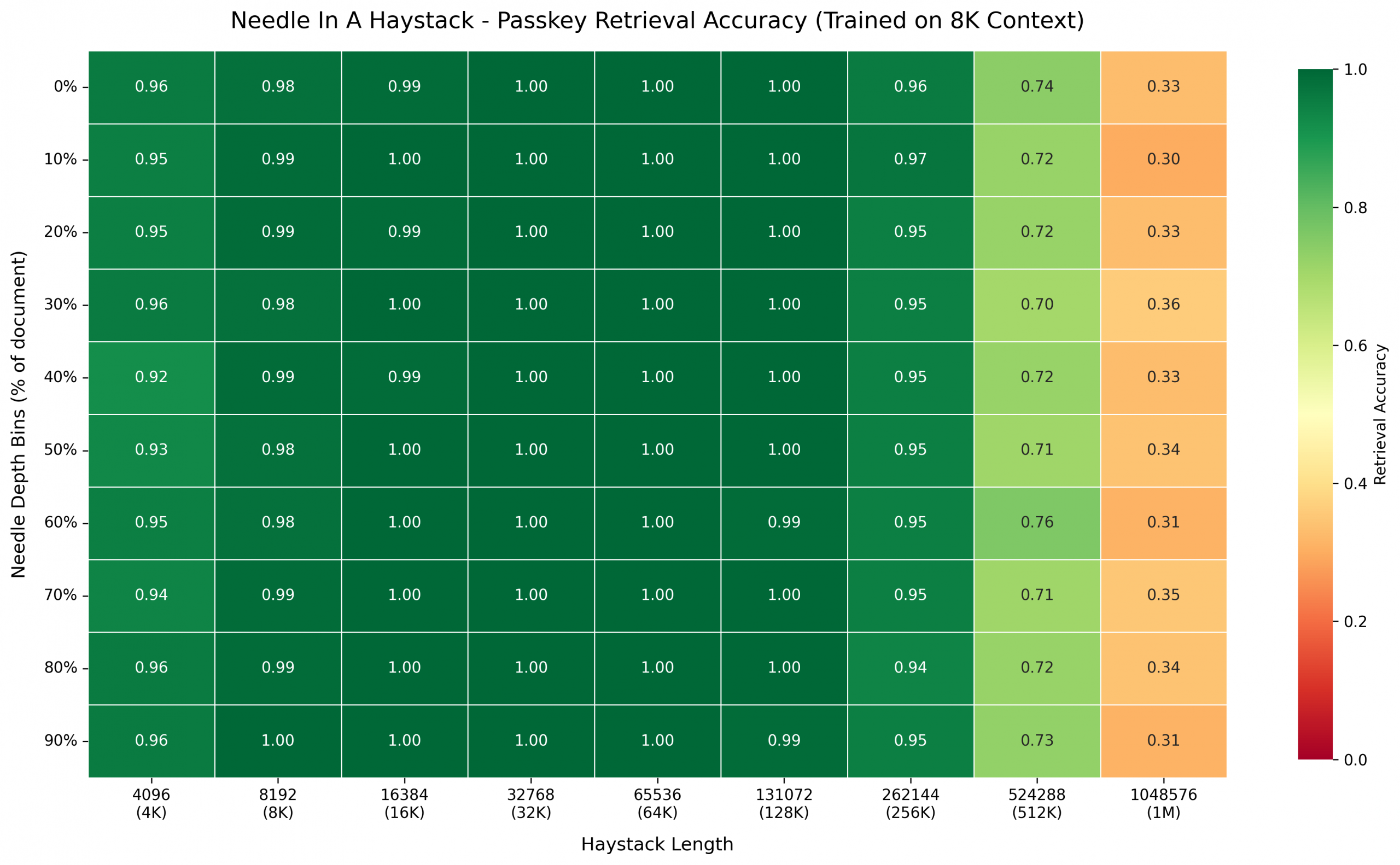
Zhongpan Tang proposes ProxyFormer, a dual-stream transformer architecture designed to break the quadratic scaling wall of attention computation and KV-cache memory growth. The core idea: instead of letting every token attend to every other token, the model compresses local features bottom-up into a small set of “proxy” tokens, runs expensive global attention only in that compressed space, then decompresses the result back down into the original token stream. Crucially, the local stream persists across layers, so information that was squeezed out in one compression pass is still reachable later — unlike conventional one-shot compression schemes that discard it permanently. The headline numbers: a standard decoder-only model maxes out at ~20K tokens on a 16GB GPU at batch size 1; ProxyFormer with a compression ratio of 64 reaches ~700K tokens on the same hardware. On a multi-needle retrieval task (a standard stress-test for context window fidelity), a model trained with a 64K window holds 92–95% retrieval accuracy at 1,048,576 tokens, and a model trained with an 8K window extrapolates to 256K tokens with over 94% accuracy. The paper also reports preliminary image-generation results in both pixel-space and latent-space flow matching, suggesting the architecture is not language-specific.
Cold read
The retrieval accuracy numbers are strong on paper, but “multi-needle retrieval” is a narrow benchmark — it measures whether a model can fish out planted facts, not whether it reasons coherently across a million tokens of real-world document complexity. Benchmark contamination aside, single-author preprints without peer review or reproduction should be held at arm’s length until someone else runs the code. The image-generation section is explicitly described as “preliminary,” which in academic language means “existence proof, not production-ready.” There are also no downstream task evaluations (MMLU, coding, summarization) — we don’t know what, if anything, is sacrificed in general capability when you compress at ratio 64. And the batch-size-1 constraint is load-bearing: real training workloads run much larger batches, and memory dynamics change significantly at scale.
What it means for you
- Signal maturity: 2/5 — Single preprint, no peer review, no third-party reproduction yet
- Who gets hurt: Startups whose moat is “we fine-tune on long documents” — if commodity hardware can now train at 700K+ context, that barrier falls fast
- What breaks if this is true: The capital advantage of labs with 80GB-cluster access for long-context training shrinks; long-context fine-tuning becomes a small-team play
- Why it might not land: Compression ratio 64 almost certainly degrades nuanced reasoning tasks that aren’t captured by retrieval accuracy; no evidence presented on general benchmarks
- Watch for: A third-party replication (Hugging Face, EleutherAI, or a university group) publishing comparable retrieval numbers with general-task evaluations attached — that is the real signal
Forecast as of 2026-08-26
By Q2 2027, at least one independent research group will publish a reproduction or direct comparison of ProxyFormer against a sliding-window or ring-attention baseline on a standard long-context reasoning benchmark (e.g., HELMET or ∞-Bench); if ProxyFormer’s retrieval advantage doesn’t survive that test, the architecture will stall at the “interesting paper” tier without meaningful adoption.
Source: ProxyFormer: A Dual-Stream Proxy Architecture for Ultra-Long Context and High-Resolution Generation — Zhongpan Tang. https://arxiv.org/abs/2608.23463v1