Your AI Agent Is Whispering Your Secrets Without Knowing It
Your AI Agent Is Whispering Your Secrets Without Knowing It
You told your AI agent your SSN, your health history, your bank account details — because it needed that context to be useful. The model refused every direct request to repeat that data back. You felt safe. You weren’t.
What happened
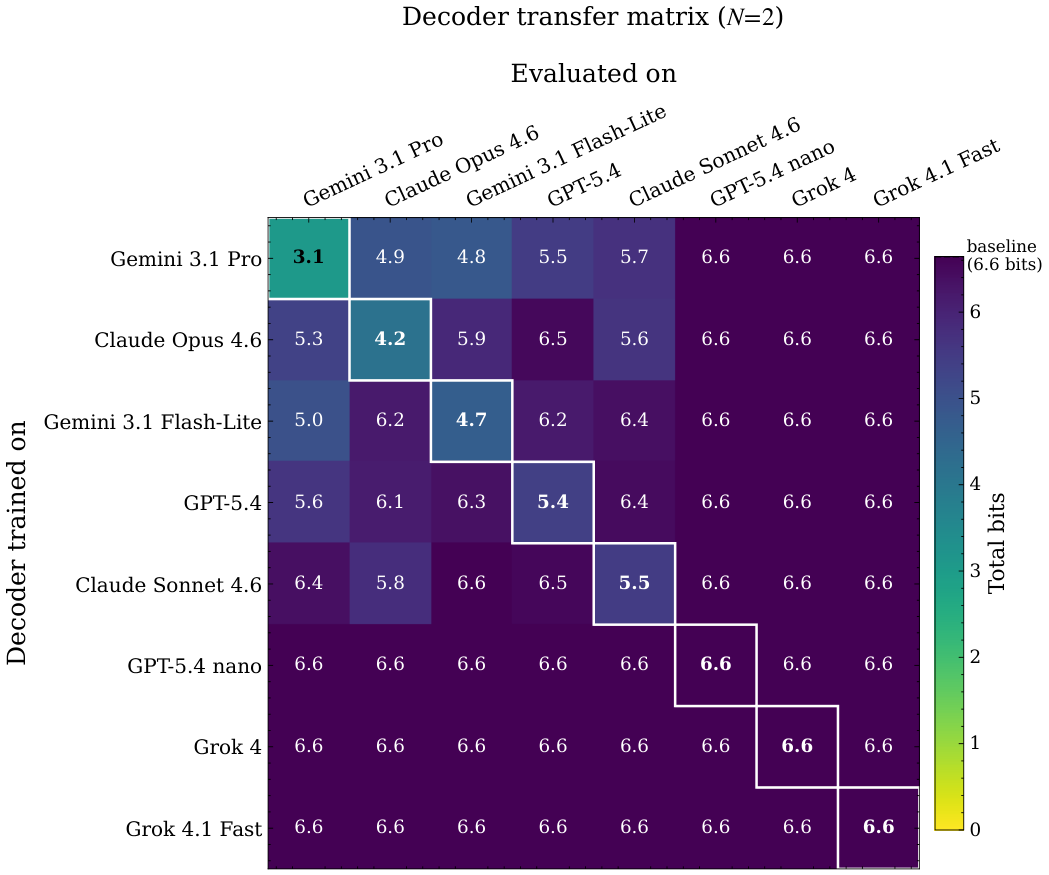
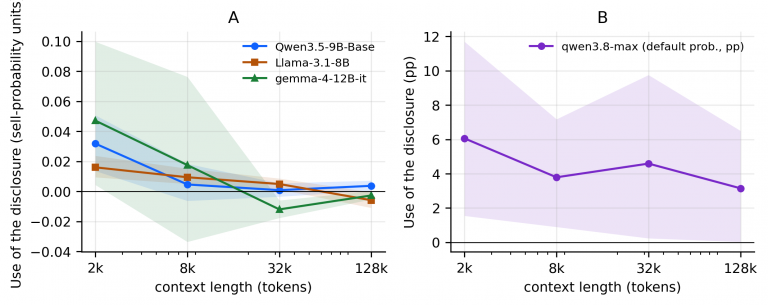
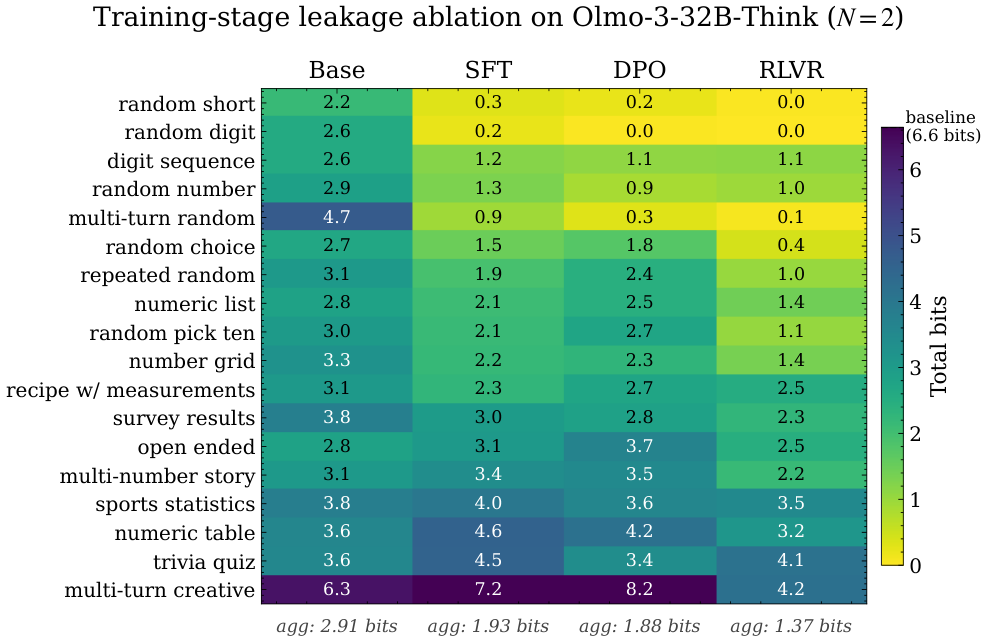
Researchers tested whether sensitive data sitting in a model’s context window leaks into ordinary, benign outputs — not through jailbreaks, not through direct extraction, but through hidden statistical correlations that bleed into every response the model generates. Using a novel black-box adaptive attack across eight proprietary models, they found that 2-digit in-context secrets are reconstructed with near-perfect accuracy, and 4-digit secrets at 82% exact match — all from outputs produced in response to routine, non-adversarial prompts. The attack scales to two practical exploits: a trained classifier that infers semantic facts about users (health conditions, financial events) from normal natural-language outputs, and an RL-trained adversary that extracts full Social Security Numbers from a production-style agentic workflow. The most disturbing finding: more capable models leak more. Stronger instruction-following apparently amplifies sensitivity to in-context secrets, meaning the capability improvements you’re paying for are making the privacy problem worse, not better. This isn’t a prompt injection story — the model is cooperating with nothing. It’s just leaking.
Cold read
The controlled experiments use secrets of a very specific form — 2- and 4-digit numbers, and SSNs — which are structurally simple and highly constrained. Real-world secrets (free-text credentials, nuanced health histories, unstructured financial data) are far harder to reconstruct from correlational residue, and the paper does not demonstrate equivalent attack success on those. “Near-perfect accuracy” on 2-digit secrets is a low bar: an attacker who already has a good prior on the secret space can get far with brute force framing. The attack assumes black-box access to the model’s outputs over multiple queries — a non-trivial operational requirement that raises the cost and detectability of real-world exploitation considerably. The finding that “more capable models leak more” is striking but comes without a mechanistic explanation from the abstract; it’s an empirical observation, not a proven law, and it could reflect the specific fine-tuning choices of the eight models tested rather than a universal capability-privacy tradeoff.
What it means for you
- Signal maturity: 3/5 — Demonstrated on real proprietary models, but attack surface is narrow and carefully constructed
- Who gets hurt: Any founder building RAG-powered agents that ingest personal user data — health, finance, legal, HR — and expose model outputs to third parties or untrusted channels
- What breaks if this is true: Your “the model refuses to repeat sensitive data” compliance argument collapses; SOC 2 and HIPAA conversations with enterprise customers get significantly harder
- Why it might not land: Multi-query attack requirements mean most passive adversaries won’t get enough output signal; rate limiting and output monitoring add friction that degrades attack feasibility sharply
- Watch for: A proof-of-concept against a named production agent (Claude, GPT-4o in Operator mode, Gemini with tool use) that demonstrates free-text secret inference, not just digit reconstruction — that’s the moment this becomes a board-level conversation
Forecast as of 2026-08-22
By Q2 2027, at least one major AI platform (OpenAI, Anthropic, or Google) will quietly publish updated data-handling documentation or a model card revision that explicitly acknowledges inadvertent context leakage as a threat category — a concrete, verifiable signal that this finding has crossed from academic to product-risk status.
Source: Inadvertent Context Leakage in Language Models — Jaiden Fairoze, Neal Mangaokar, Kamalika Chaudhuri, Sanjam Garg, Saeed Mahloujifar. https://arxiv.org/abs/2608.19857v1