Your AI Judge Is Quietly Corrupting Your Clinical AI — At Scale
Your AI Judge Is Quietly Corrupting Your Clinical AI — At Scale
You handed quality control to an AI grader. That grader is now shaping what your model learns to say. In healthcare, that feedback loop doesn’t just ship a bad feature — it ships a bad diagnosis.
What happened
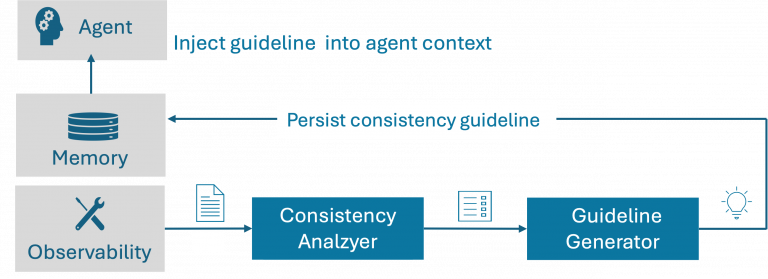
A team of clinical AI researchers identified a structural flaw in how most teams evaluate and iterate on clinical AI systems. The paper focuses on LLM-as-judge pipelines — where a model grades another model’s outputs against a rubric — and argues that the moment you use those judge scores to do prompt-level ranking or model training, the judge stops being a neutral observer and becomes part of the intervention itself. The core failure mode: selection pressure will systematically favor outputs that contain errors the judge is blind to, because those errors never get penalized. The authors don’t just flag the problem — they specify what a judge’s report must contain and argue that every judge-driven change requires an independent clinical test before deployment. No specific accuracy numbers are reported in the abstract, but the framing is unambiguous: at the scale clinical AI operates, judge hallucination blindspots compound into systematic, undetected clinical risk.
Cold read
This paper is a framework paper, not an empirical study — there is no controlled experiment, no dataset, no measured error rate showing how much drift actually occurs in production clinical systems. The argument is logically coherent but the abstract offers zero quantification of how often judge-driven selection actually introduces harm versus corrects it. The claim that evaluation “becomes” intervention is true in principle but the severity depends entirely on how blind the judge is, how many iterations you run, and how diverse your golden dataset is — none of which are parameterized here. This is a warning paper, written by people close to clinical deployment, and it deserves to be read as such — but it doesn’t yet prove the magnitude of the problem it describes. Founders may also note that the proposed fix (“independent clinical test for every judge-driven change”) is expensive enough to slow iteration cycles to near-zero in a startup context.
What it means for you
- Signal maturity: 3/5 — solid conceptual contribution, no empirical validation yet
- Who gets hurt: Health tech startups using automated eval pipelines to ship prompt updates or fine-tune models without clinician review in the loop
- What breaks if this is true: Your entire LLM eval flywheel is a liability in regulated clinical settings — every iteration you thought was an improvement may be an unreviewed clinical change
- Why it might not land: The proposed remedy (independent clinical test per change) is operationally incompatible with agile AI development; teams will acknowledge the risk and discount it rather than slow down
- Watch for: An FDA or CE guidance document citing AI judge contamination as a specific validation risk — that would force the operational reckoning this paper is calling for
Forecast as of 2026-11-16
By Q3 2027, at least one FDA guidance update or enforcement action involving a clinical AI product will explicitly cite inadequate separation between automated evaluation and model selection as a contributing failure — making this paper’s framing retroactively prescient and directly quotable in regulatory submissions.
Source: When evaluation becomes intervention in clinical AI — Anthony Abou Mrad, Aviona Conti, Samuel Schmidgall, Jayanth Pratap, Ruhika Iyer, Joseph Kim, King Shi, Yann Sakref, Luis M. Ahumada, Lisa Knowlton, Andrew M. Cameron, Khyzer Aziz, Jeffrey K. Jopling. https://arxiv.org/abs/2611.18297v1