Your AI Memory Layer Is Quietly Laundering Rumors Into Facts
Your AI Memory Layer Is Quietly Laundering Rumors Into Facts
Every time your AI rewrites a conversation into a stored memory, it may be stripping out “I heard that…” and saving “The client wants…” That’s not a nuance problem — that’s a liability problem. One researcher built a gate to catch it, and the early numbers are uncomfortable.
What happened
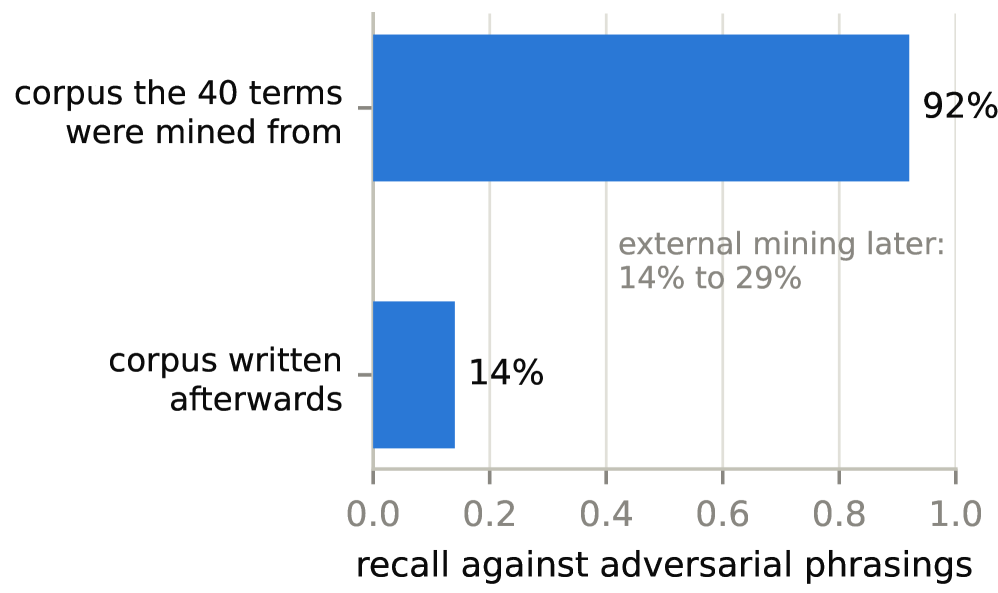
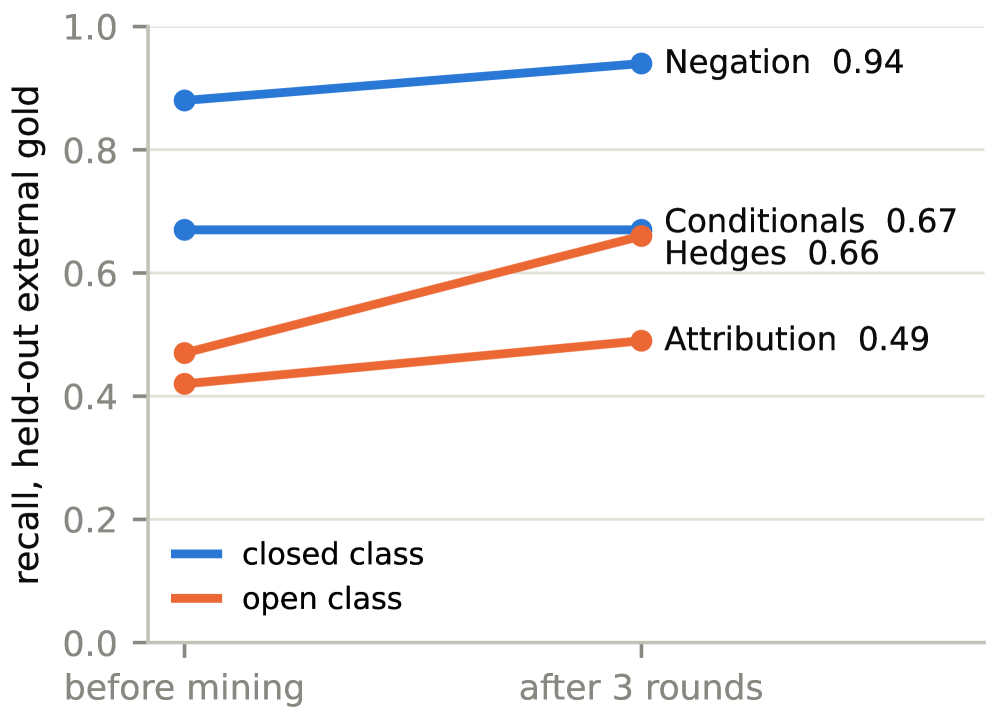
Alex Kwon identifies and names a specific failure mode: factwashing, where an AI rewrite preserves a claim while discarding the signals that made it checkable — the source, the confidence hedge, the timestamp. Think of agent memory vs. context window architectures like mem0: a user says “I think John mentioned the budget might be $50k,” and what gets stored is “Budget is $50k.” The paper releases factwash, a deterministic, open-source write-time gate that flags these rewrites using named flags and evidence rather than an LLM-as-judge approach. On 105,596 independently annotated sentences, the gate achieves 0.91 F1 on negation detection (near-enumerable cues), but hedging and attribution top out near 50% recall with a vocabulary-only approach — requiring a single-question LLM witness to recover +17 and +15 recall points respectively, at equal precision. Crucially, the corpus of actual memory writes reveals the failure is not evenly distributed: 55% of bad writes come from conversational hearsay, versus just 7% in business email (p < 0.001). Tested on unmodified mem0 2.0.7, the gate flags 5 of 8 hedged-hearsay writes — a 62.5% catch rate on a live system, out of the box.
Cold read
The headline number — 0.91 F1 — applies only to negation, the easiest subproblem, where cues are nearly enumerable. The harder problems (hedging, attribution) plateau around 50% recall before the LLM witness is added, which means the “deterministic” gate alone misses roughly half the cases that actually matter. The live system test is eight writes — eight — which is an illustrative demo, not a validation study. The paper also openly acknowledges the LLM witness in deployment mode can only lower a verdict (buying precision, not coverage), so you’re trading recall for confidence, not solving the coverage problem. Finally, the 55% vs. 7% split by context type is compelling, but it means the tool’s value is highly domain-dependent — if your AI memory layer lives in a structured enterprise workflow rather than freeform chat, you may be deploying a solution to a problem you barely have.
What it means for you
- Signal maturity: 2/5 — named problem, working prototype, but validated on a toy-scale live test
- Who gets hurt: Founders running RAG-based products or AI memory layers over conversational data — CRMs, meeting summarizers, AI chiefs of staff, customer success tools
- What breaks if this is true: Any factual consistency guarantee you’ve implicitly made to enterprise customers is probably wrong; your memory layer is a hearsay laundering machine, and your audit trail is fiction
- Why it might not land: The failure rate collapses in structured contexts (7% in business email); if your input is forms, tickets, or templated data rather than chat, this paper is not about your stack
- Watch for: mem0, LangMem, or similar memory-layer libraries shipping a “write-time validation” config option — that’s the signal the problem has been acknowledged by infrastructure providers, not just researchers
Forecast as of 2026-08-05
By Q2 2027, at least one enterprise AI memory library (mem0, Zep, or equivalent) will ship a write-time provenance-preservation flag as a default-off config option, citing hearsay-laundering risk — but fewer than 20% of production deployments will enable it.
Source: FACTWASH: Catching AI Rewrites That Wash Hearsay into Fact — Alex Kwon. https://arxiv.org/abs/2608.03372v1