Graph RAG Just Got 99% Cheaper — Or Did It?
Graph RAG Just Got 99% Cheaper — Or Did It?
A new paper claims to obliterate the cost of graph-based retrieval — 100× faster, 99% cheaper, same quality. If true, the main reason startups avoided GraphRAG evaporates overnight. That’s a big “if.”
What happened
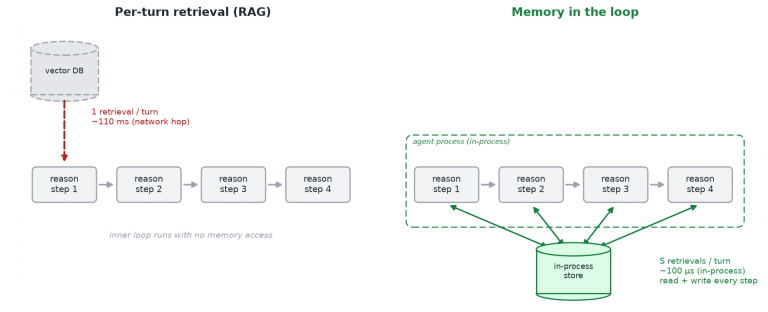
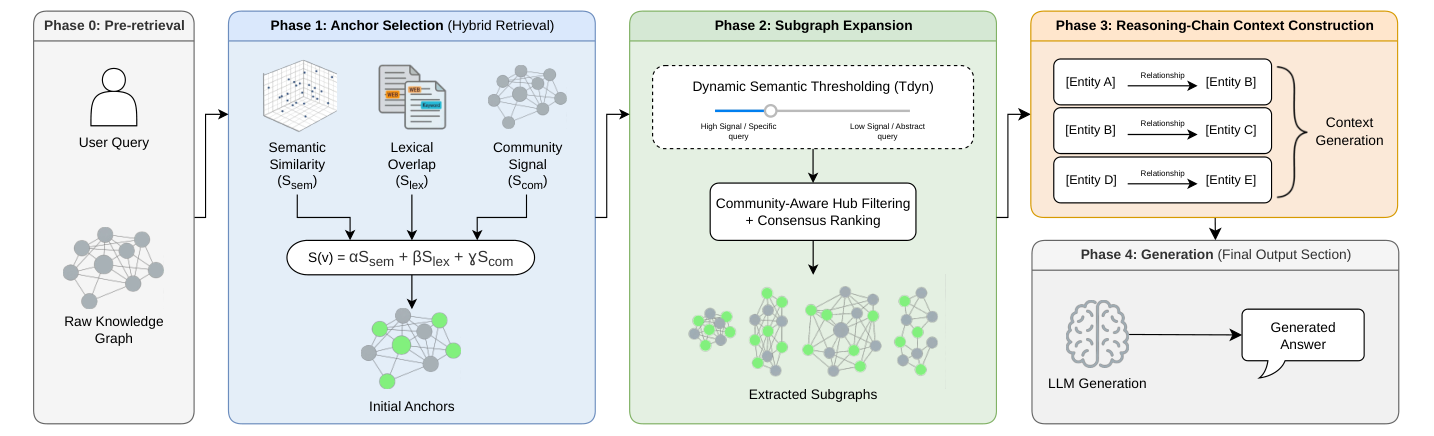
LiteRAG is a graph-based retrieval-augmented generation method that strips out the expensive LLM calls that competitors like GraphRAG Global and DRIFT use at query time to navigate a knowledge graph. Instead of paying an LLM to orchestrate traversal, LiteRAG uses algorithmic exploration conditioned on the query, plus a reasoning-chain approach to context construction. On DistComp — a benchmark for multi-hop questions over distributed-systems papers — it hit the highest overall quality score of the evaluated methods (0.798) while delivering over 100× lower latency and over 99% lower per-query cost versus GraphRAG Global and DRIFT. On UltraDomain, it matched LinearRAG on quality while consuming roughly 14× fewer tokens, which matters directly for context window costs. An ablation study fingered two specific mechanisms — query-adaptive thresholding and community-aware hub penalization — as the primary drivers of that token efficiency.
Cold read
Two benchmarks is a slim evidentiary base. DistComp is a domain-specific retrieval benchmark over distributed-systems papers — a narrow, structured corpus that may flatter algorithmic graph traversal versus messier, real-world knowledge bases. The paper compares against GraphRAG Global and DRIFT, but the broader RAG landscape has many variants; cherry-picking comparators is a known sport in this literature. “Overall quality” at 0.798 is a composite score — the abstract doesn’t break down factual consistency, retrieval precision and recall, or hallucination rates separately, so you can’t tell what you’re trading away for the cost savings. And the moment you move to a domain with noisier entity relationships — e-commerce, legal, healthcare — the algorithmic traversal that replaced LLM control may produce retrieval artifacts that the benchmarks here simply don’t expose.
What it means for you
- Signal maturity: 2/5 — promising mechanics, single-team evaluation on narrow benchmarks
- Who gets hurt: Vendors selling “enterprise GraphRAG” on the premise that expensive LLM-orchestrated graph traversal is unavoidable — their pricing justification just got a credibility problem
- What breaks if this is true: The cost ceiling that kept smaller AI startups away from graph-based multi-hop Q&A collapses, commoditizing a moat that players like Microsoft (GraphRAG) have been building
- Why it might not land: Algorithmic graph traversal without LLM control likely degrades sharply on ambiguous queries or heterogeneous corpora; the benchmarks used may be too clean to surface this
- Watch for: Independent replication on a messy, open-domain corpus (Wikipedia-scale or legal docs) with a broken-out hallucination rate — that’s the real stress test
Forecast as of 2026-09-10
By Q3 2027, at least one major open-source RAG framework (LlamaIndex, LangChain, or a direct fork) will ship a LiteRAG-style algorithmic traversal module — but adoption in production enterprise deployments will remain under 15% of graph-RAG usage, limited by the difficulty of graph construction on unstructured corpora rather than by query-time cost.
Source: LiteRAG: Cost-Efficient Graph-Based Retrieval-Augmented Generation — Daniel Alejandro Coll Tejeda, Pedro García López, Daniel Barcelona-Pons. https://arxiv.org/abs/2609.10239v1