One Fine-Tuned Model Killed Seven Competitors and Ate Their GPU Budget
One Fine-Tuned Model Killed Seven Competitors and Ate Their GPU Budget
A single post-trained LLM now handles 116 million corporate requests per month—replacing a sprawling fleet of specialized models. If the numbers hold, this is the enterprise GPU consolidation story everyone claimed was coming but nobody showed receipts for. Here come the receipts.
What happened
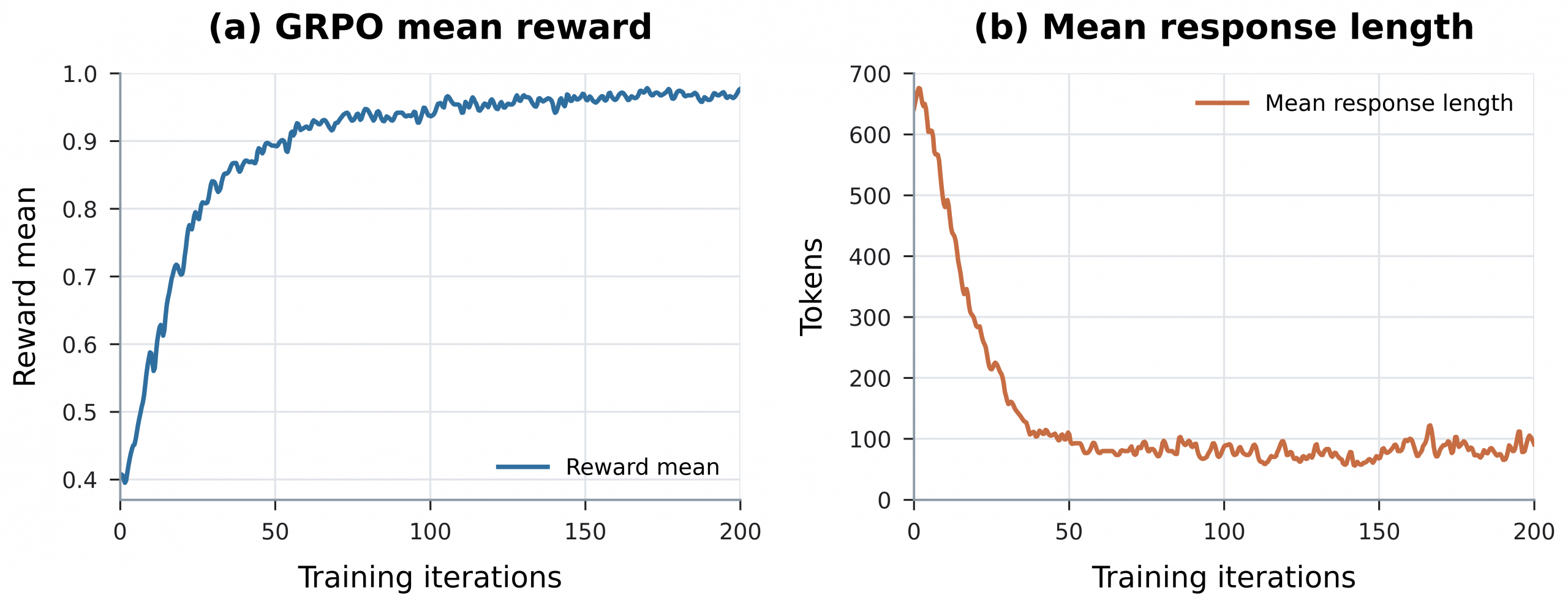
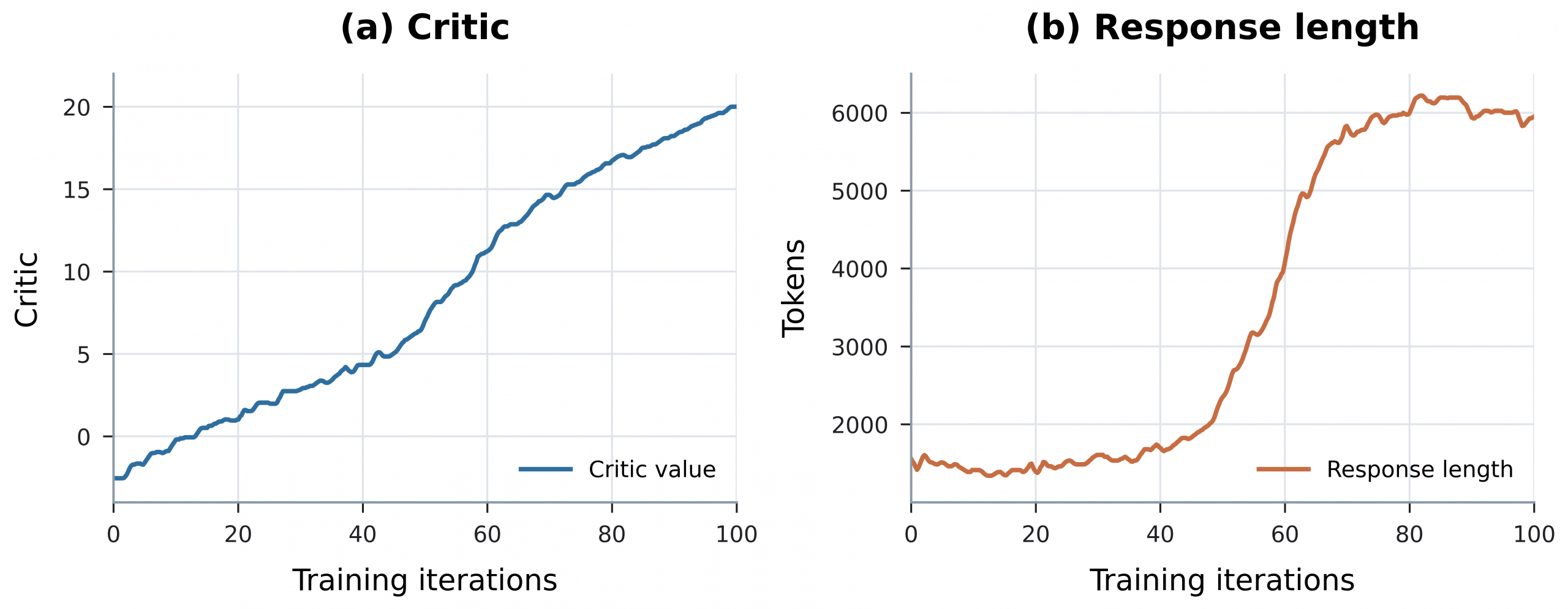
Researchers at what appears to be a large enterprise (200+ internal applications, a private GPU cluster) were drowning in model sprawl: every new LLM adoption meant another model sitting in the serving fleet, fragmenting an already finite GPU pool. Their fix was to post-train a single smaller model to cover the full corporate request mix across three axes—instruction following, tool use and function calling, and internal task distribution. Instead of optimizing all three jointly (which caused cross-domain reward interference), they trained a separate GRPO expert per axis and merged the three via two-stage SLERP model merging. Each expert exposed a distinct failure mode: semantic collapse in instruction following, over-calling in function-calling, and verbosity hacking in dialogue. Quality was tracked using offline benchmarks stratified to match production traffic and scored by deterministic verifiers or LLM-as-judge evaluators. The resulting model beat a baseline roughly 7× larger in total parameters on an in-house Arena (69.6 vs. 65.8), instruction following (0.85 vs. 0.83), and function-calling (0.79 vs. 0.77), while absorbing 50% of platform traffic—116M requests/month—at a fraction of prior serving cost.
Cold read
The core claim—beating a model 7× larger—is striking, but “total parameters” is doing heavy lifting here: the baseline is almost certainly a mixture-of-experts model where active parameters per token are far closer to parity, making the efficiency comparison significantly less dramatic than it reads. The evaluation is entirely in-house: the Arena, the benchmarks, and the judges are proprietary, so there is no external validation of the 69.6 vs. 65.8 win; benchmark contamination risk in a closed system is real and unaddressed. The traffic mix (200 internal apps) is specific to one organization’s corporate footprint—generalization to a different enterprise’s request distribution is not shown and may require the entire pipeline to be re-run from scratch. Finally, the paper names three failure modes they fixed but doesn’t quantify how much each degraded before the fix or what the pre-training base model was, making the contribution hard to reproduce or even scope.
What it means for you
- Signal maturity: 3/5 — Real production numbers, but closed evaluation stack limits trust
- Who gets hurt: GPU-as-a-service vendors and multi-model inference orchestration startups selling “fleet management” as a product
- What breaks if this is true: The case for maintaining separate fine-tuned models per enterprise use-case collapses; a single well-post-trained model on your traffic becomes the defensible moat, not model variety
- Why it might not land: The GRPO-per-axis + SLERP merge recipe is non-trivial engineering; most enterprises lack both the production traffic volume (116M/month to calibrate against) and the ML infrastructure to replicate it without significant cost
- Watch for: Open-source replication of the SLERP-merge-of-GRPO-experts recipe on public models; if it shows up in the Hugging Face leaderboard top-10 by Q1 2027, the technique has escaped the lab
Forecast as of 2026-09-02
By Q2 2027, at least two enterprise AI platform vendors (likely in the MLOps/fine-tuning space—think Fireworks AI, Together AI, or a direct competitor) will publicly ship a “traffic-aware consolidation fine-tuning” product that cites this or parallel work as the methodological basis—or this approach will remain a bespoke internal capability that never commoditizes because the data flywheel it requires is the actual moat.
Source: From Production Traffic to Post-Training: Building a Self-Hosted LLM That Covers the Corporate Request Mix — Olga Tsymboi, Dmitrii Stoianov, Ramil Latypov, Danil Taranets, Daniil Dryabin, Mikhail Gashkov, Viktor Zelenkovskiy, Aleksandr Fida, Gleb Alektorov, Nikita Gulyakov, Arthur Babkin, Aleksandr Medvedev, Pavel Gein, Anatolii Potapov. https://arxiv.org/abs/2609.01572v1