Your AI Agent Just Got Root Access. Nobody Knows How to Secure It.
Your AI Agent Just Got Root Access. Nobody Knows How to Secure It.
The autonomous agents you’re deploying to call APIs, modify files, and query databases are operating in a near-total security vacuum. Researchers have spent three years cataloguing how to break these systems and approximately zero time figuring out how to stop them. If your agent gets compromised, the blast radius is not a wrong answer — it’s irreversible state changes in your production environment.
What happened
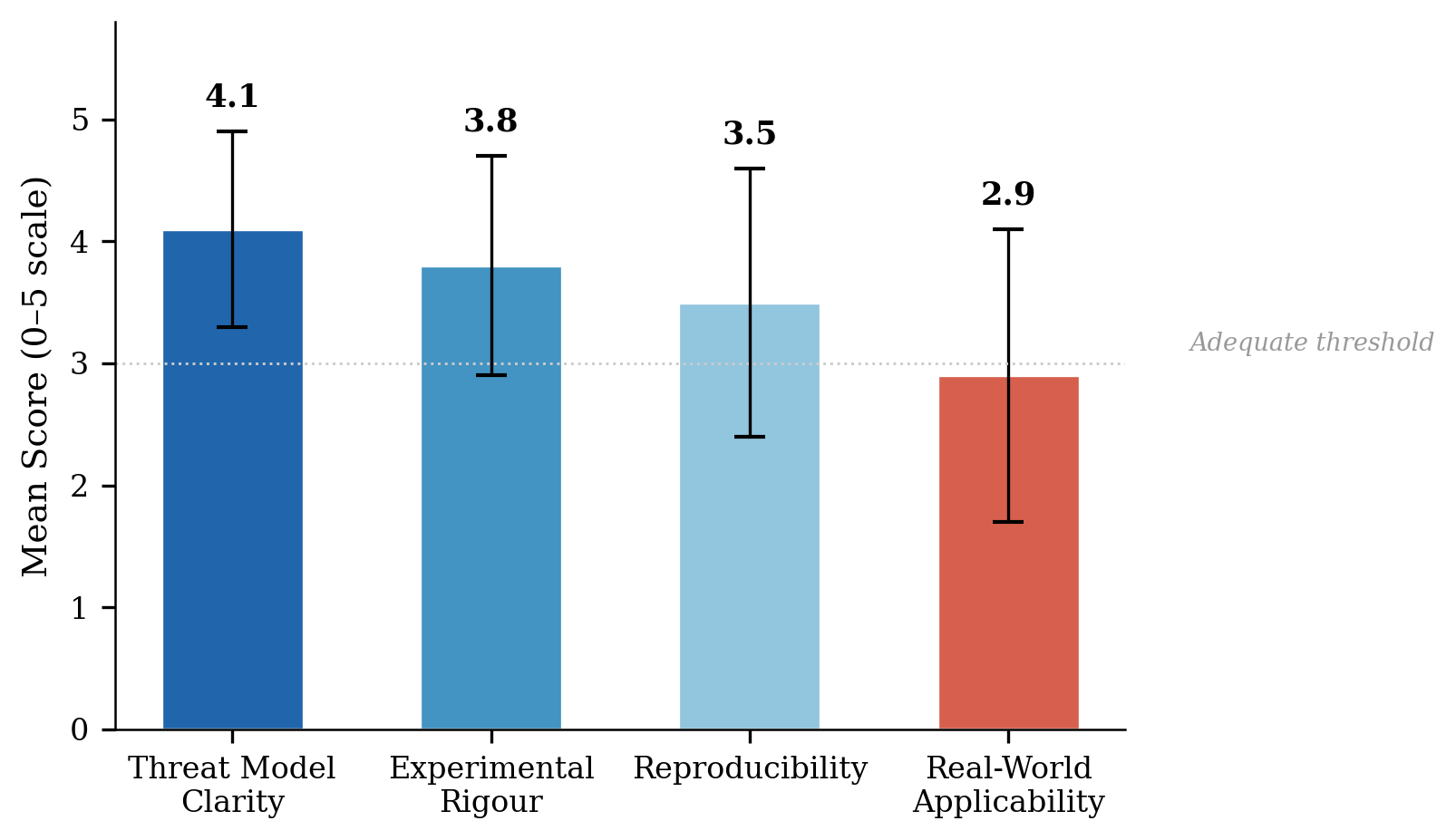
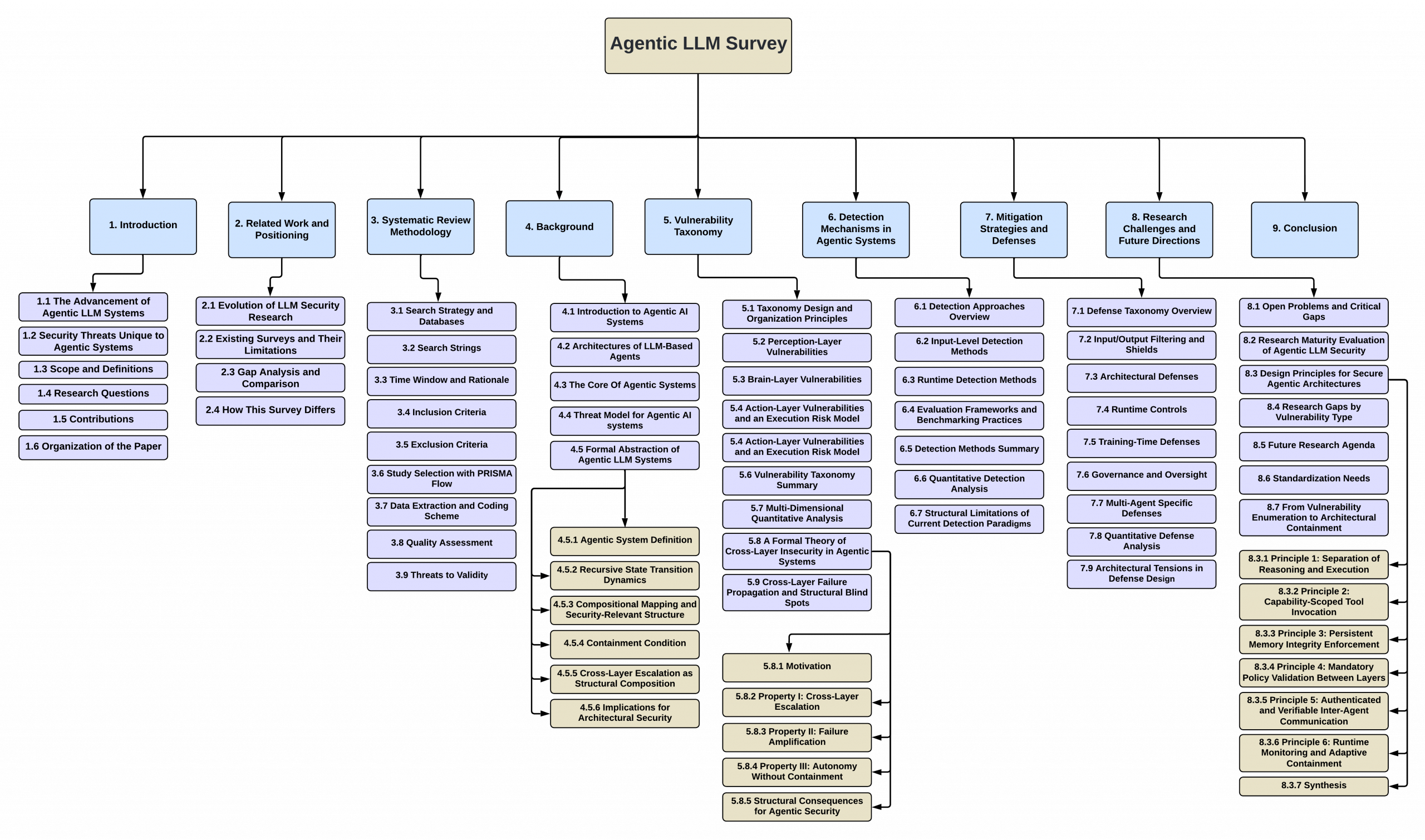
Hossain et al. ran a PRISMA 2020 systematic literature review across six databases, screened 743 papers, and retained 85 studies published 2023–2025 specifically on agentic workflow security. The headline number: attack research outpaces defense research 3.9 to 1. The field isn’t balanced — it’s an arms race with one side showing up. Worse, the distribution of research is badly miscalibrated to actual risk: perception-layer vulnerabilities like prompt injection and jailbreaking dominate at 66% of papers, while action-layer vulnerabilities — tool misuse, code injection, sandbox escape — appear in only 4.7% of the literature. Code execution security gets 3.5% of research attention, and tool-augmented agents only 12%, despite these being the exact vectors where a compromised reasoning step triggers real-world consequences. The authors contribute a four-layer taxonomy covering 13 vulnerability types across perception, brain, action, and interaction layers, and identify seven open containment problems. Their core structural finding: “architectural coupling” means a weakness in one layer propagates freely across all the others.
Cold read
This is a literature review, not an empirical attack study — so what it actually proves is that researchers haven’t studied certain things, not that those things are catastrophically dangerous in practice. The 85-paper corpus is small enough that a few prolific research groups could skew the distribution significantly, making the 66%/4.7% split reflect academic fashion as much as real-world threat frequency. The authors screen papers from 2023–2025, a period when prompt hacking was the hot topic by cultural momentum; the research gap they identify may be closing faster than their review window captures. “Architectural coupling” is a meaningful structural claim, but the paper doesn’t quantify how often layer-crossing propagation actually succeeds in deployed systems — the jump from “could happen” to “does happen at scale” is not made. For founders, a 3.9:1 attack-to-defense ratio is alarming on a slide deck but tells you nothing about exploitability rates in your specific stack.
What it means for you
- Signal maturity: 2/5 — taxonomy-stage research; no exploitability benchmarks, no red-team datasets
- Who gets hurt: Any startup that has shipped an agent with file-write, API-call, or database-query privileges and assumed the system prompt was your security boundary
- What breaks if this is true: Your SOC 2 story. An agent that can trigger “irreversible state changes” on a compromised reasoning step is not a product you can credibly audit under current compliance frameworks
- Why it might not land: Most production agents are more sandboxed than academic threat models assume; “tool misuse” in a controlled integration looks very different from full sandbox escape in the wild
- Watch for: The first publicly disclosed breach attributed specifically to action-layer agent compromise (tool misuse or code injection in prod) — that’s the event that turns this taxonomy into a compliance checklist overnight
Forecast as of 2026-08-12
By Q2 2027, at least one major cloud or SaaS vendor will publish a post-mortem citing agent action-layer compromise (tool misuse, code injection, or unauthorized API chaining) as the root cause of a customer data incident — forcing a visible industry response on agent sandboxing standards. If that disclosure doesn’t happen, the threat remains theoretical and the research gap stays an academic problem, not a founder problem.
Source: On Understanding, Identifying, and Mitigating Vulnerabilities in Agentic Large Language Models — Md Jafrin Hossain, Mohammad Arif Hossain, Nirwan Ansari. https://arxiv.org/abs/2608.10530v1