Your “Smart” Prompt Compression Is Secretly Blowing Up Your API Bill
Your “Smart” Prompt Compression Is Secretly Blowing Up Your API Bill
Every clever query-aware compression trick you bolted onto your LLM stack to save money? It’s been silently destroying your cache hits and costing you more than doing nothing. One paper ran the numbers, and the results are ugly enough to rewrite your infrastructure checklist.
What happened
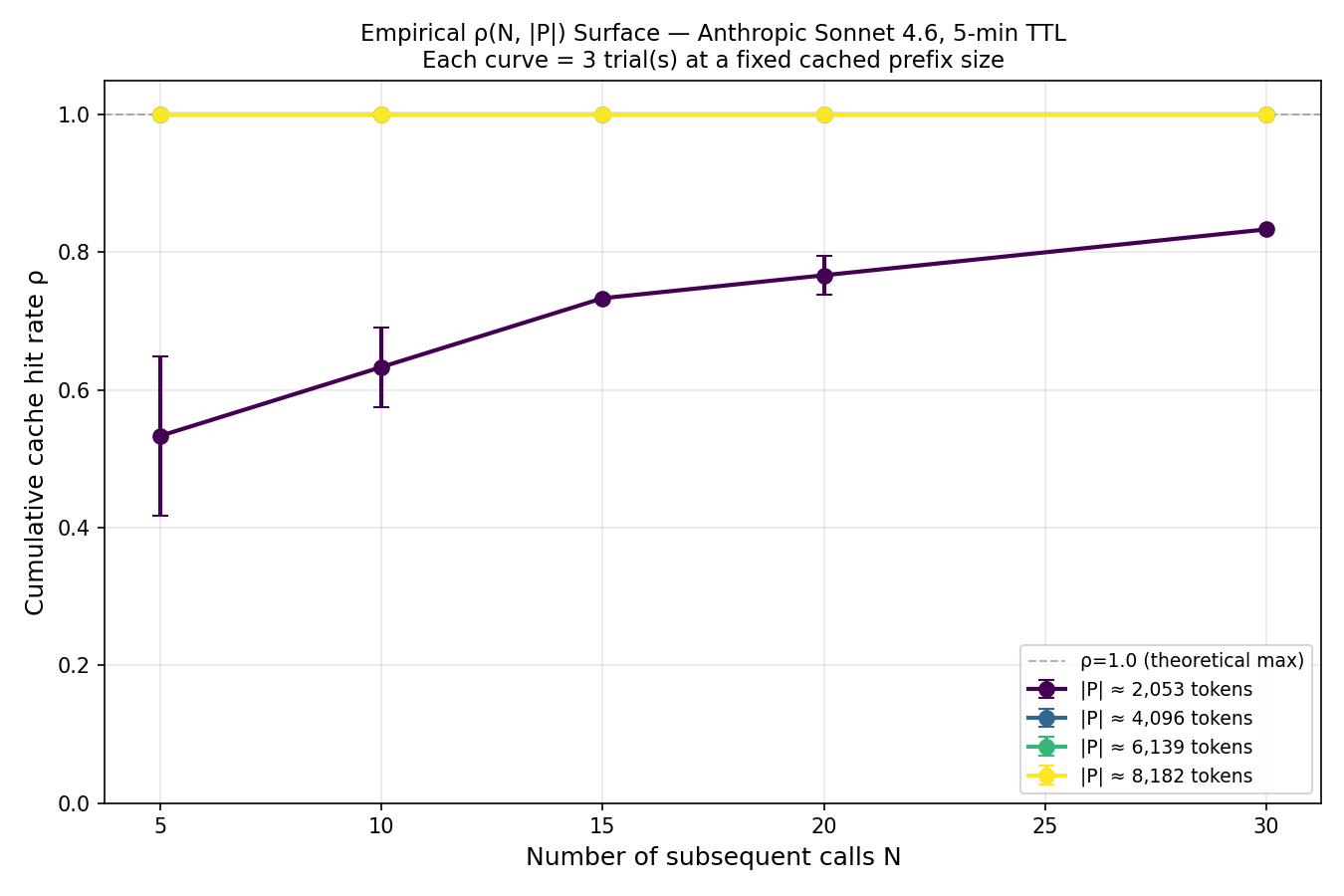
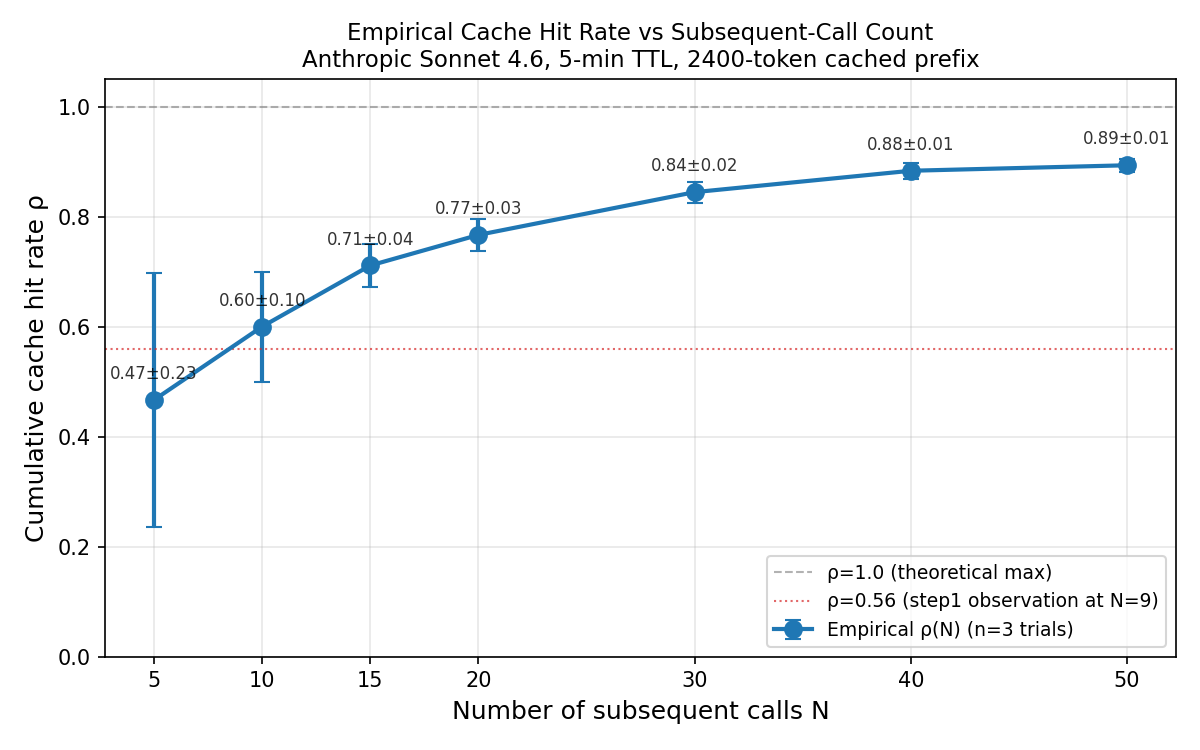
Researcher Yan Song identified a fundamental conflict baked into most production LLM cost-optimization stacks: prompt engineering tricks that compress prompts per-query inevitably mutate the token prefix on every call, killing the prefix-strict cache that would have saved you money in the first place. The paper empirically characterized Anthropic Sonnet 4.6’s actual caching behavior and found it is not the clean ρ=1.0 ideal the academic literature assumes — it’s a two-tier architecture with a hard threshold near 3,500 tokens, and below that line, cache hit rate plateaus around ρ≈0.83 even across 30-call sessions. The cost model built from this reality predicts — and experiments confirm — that query-aware compression only beats naive caching when compression ratios hit r≥6, which is aggressive enough to meaningfully degrade quality. The proposed fix, Cache-Aware Prompt Compression (CAPC), pairs query-agnostic compression with explicit cache controls and a ratio bound that prevents over-compression from knocking the cached prefix down into the lower tier. Tested across all 16 configurations on LongBench-v2 and three production workloads — including a retrieval-augmented generation pipeline over two codebases and a 94k-token enterprise schema prefix — CAPC won every one, delivering mean savings of 49% over cache-only, 64% over query-aware compression, and 90% over vanilla, with quality within 0.05 of the uncompressed baseline. The tau-bench retail benchmark is the sharpest finding: query-aware compression was the most expensive strategy of four tested, running +40.1% over vanilla while CAPC matched vanilla’s exact task reward (36/50, p=1.00) at the lowest cost.
Cold read
This is a single-author paper testing a single provider’s (Anthropic Sonnet 4.6) caching implementation — the two-tier threshold at 3,500 tokens and the ρ≈0.83 plateau are empirical facts about one API in one period, and providers change pricing and cache architecture without warning. The benchmark contamination risk is real: LongBench-v2 is a known quantity, and the production workloads (enterprise tool assistant, two specific codebases, tau-bench) are small-N validations, not a statistically robust sample of the diversity of actual startup workloads. The 50-task tau-bench result is promising but 50 tasks is a thin basis for a “first production confirmation” headline — the p=1.00 equivalence on reward means you shouldn’t read much signal into the quality parity either. CAPC’s tier-preserving ratio bound sounds elegant, but it requires knowing your provider’s caching architecture in advance; that knowledge is undocumented, inferred empirically here, and will drift. Finally, the gains are dominated by the 94k-token enterprise schema case — if your system prompt is short, the math changes substantially.
What it means for you
- Signal maturity: 3/5 — Solid empirical finding on a real conflict, but single-provider, small-N production validation
- Who gets hurt: Any team running a RAG pipeline or agent with a large, stable system prompt who bolted on a query-aware compressor (LLMLingua, Selective Context, etc.) thinking they were stacking optimizations
- What breaks if this is true: The entire category of query-aware prompt compression middleware sold as a drop-in cost saver becomes net-negative ROI for any deployment with meaningful cache reuse — a quiet indictment of several YC-era “LLM cost optimization” startups
- Why it might not land: OpenAI, Google, and future Anthropic pricing tiers may have different threshold structures that shift the crossover point; the analysis is already obsolete if your provider changes caching policy, which they do silently
- Watch for: Anthropic or OpenAI publishing explicit, documented caching tier specs — the moment providers make this architecture transparent, CAPC’s tuning becomes reproducible and adoption accelerates fast
Forecast as of 2026-07-20
By Q1 2027, at least one major prompt compression library (LLMLingua or equivalent) will ship a “cache-aware” mode that implements query-agnostic compression with explicit cache-control headers as a default option — or the library stagnates as teams quietly roll their own after reading papers like this one.
Source: Cache-Aware Prompt Compression: A Two-Tier Cost Model for LLM API Caching — Yan Song. https://arxiv.org/abs/2607.15516v1