AI Watermarks Are Legally Worthless and the Regulators Don’t Know Yet
AI Watermarks Are Legally Worthless and the Regulators Don’t Know Yet
Governments have mandated AI watermarks as the bedrock of AI-generated content disclosure law. Courts are supposed to use them as evidence. New research shows they collapse under the simplest possible attack — a paraphrase — and fail every serious forensic standard. The compliance infrastructure you’re building may be built on sand.
What happened
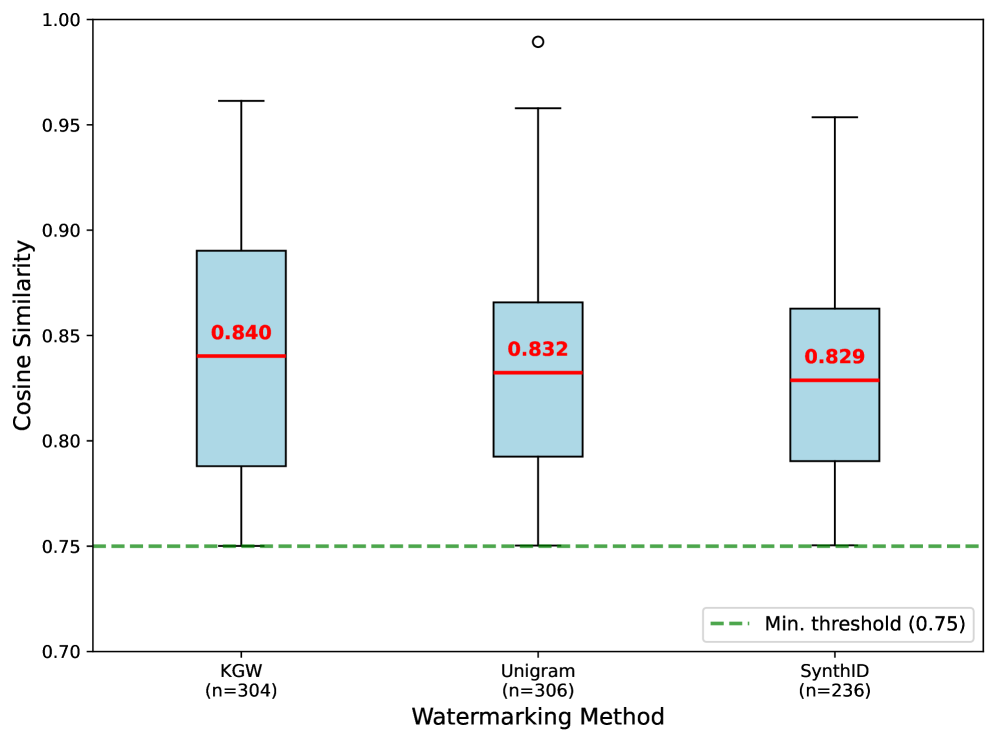
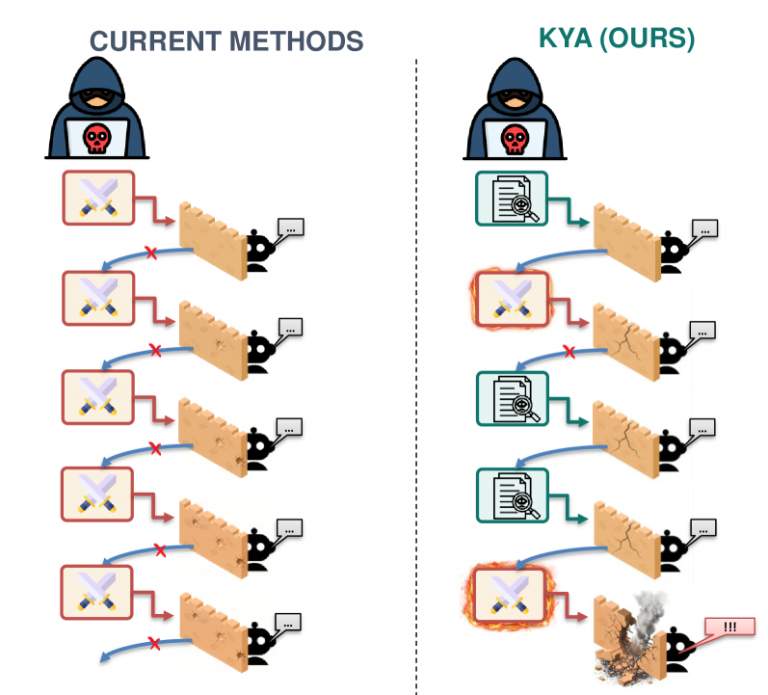
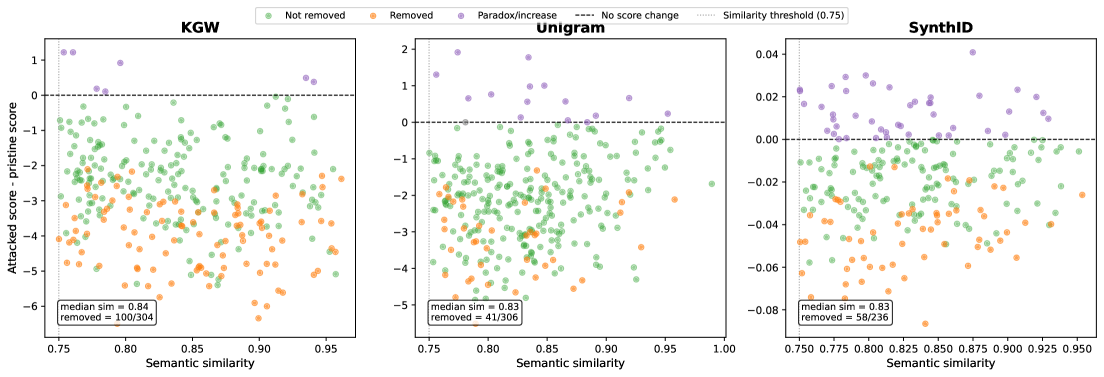
Researchers tested three production-grade LLM watermarking schemes — KGW, Unigram, and a SynthID-Text implementation via MarkLLM — against real forensic and legal standards: the Daubert admissibility criteria used in U.S. courts, and the NIST SP 800-86 digital forensic process. The attack they chose was deliberate and lawyerly: meaning-preserving paraphrase, the kind of rewrite any editor or AI content detection circumvention tool can produce without obviously tampering with evidence. The results were not ambiguous. Across 846 valid paraphrase runs on 15 diverse prompts per method, KGW and Unigram lost their watermarks 100% of the time after paraphrasing. SynthID held up slightly better — it still failed 98.3% of the time. Even on pristine, unattacked output, false-negative rates were staggering: 70% for KGW, 83% for Unigram, 80% for SynthID. SynthID also flagged 5.4% of human-written text as AI-generated and exhibited an 18.6% “paradox rate” — meaning 80% of its own watermarked output landed in an uncertainty zone it couldn’t classify. Using a custom Forensic Readiness Score (FRS) framework with 12 criteria and 60 possible points, none of the three methods satisfied more than two of five Daubert factors. The paper’s blunt conclusion: these systems, as configured, do not meet the evidentiary bar courts require.
Cold read
This is one lab’s implementation of these methods, not the canonical production deployments at Google or OpenAI — SynthID-Text in particular has a commercial version that may differ materially from the MarkLLM build tested here. The paper evaluates watermarks at the output text level; it does not test cryptographic or metadata-layer approaches, which some vendors are pursuing instead. The FRS framework is the authors’ own invention, not an established forensic standard, so the “scoring” carries no external authority. The Daubert standard also applies specifically to U.S. federal courts; the EU AI Act operates on different evidentiary logic entirely. None of this invalidates the core finding — that paraphrase destroys these watermarks reliably — but founders should not treat “fails Daubert” as a universal legal verdict across all jurisdictions and all watermarking architectures.
What it means for you
- Signal maturity: 2/5 — Compelling empirics, narrow implementation scope; not yet a definitive industry verdict
- Who gets hurt: Compliance teams at AI SaaS companies building disclosure pipelines around text watermarking to satisfy the EU AI Act or California SB 942; legal teams advising on liability
- What breaks if this is true: Any product or workflow that uses AI-generated content disclosure via text watermarking as a liability shield in regulatory or litigation contexts — the shield is essentially decorative
- Why it might not land: Regulators rarely move fast enough to invalidate compliance frameworks they just mandated; you may be “compliant” with a broken standard for years before anyone is held accountable in court
- Watch for: The first contested legal case in an EU member state or U.S. federal court where AI watermark evidence is challenged under Daubert or equivalent — that is the moment this paper becomes a citation in a courtroom, not just a preprint
Forecast as of 2026-07-20
By Q3 2027, at least one major AI vendor will publicly revise or abandon text-layer watermarking in favor of provenance-based or cryptographic approaches, citing regulatory pressure and the demonstrated forensic fragility of statistical watermarks — and will reference this class of research as justification.
Source: AI Watermark Evidence Fails Forensic Readiness: An Empirical Evaluation — Saifur Rahman Tamim, Amir Labib Khan. https://arxiv.org/abs/2607.16010v1