Your “Safe” AI Is Being Steered by Typos and Paraphrases
Your “Safe” AI Is Being Steered by Typos and Paraphrases
Someone doesn’t need to crack your model’s guardrails. They just need to nudge it — with a misplaced comma, a synonym, a casual misspelling — dozens of times at once. The researchers call it model hypnosis, and it works on the frontier models you’re paying for right now.
What happened
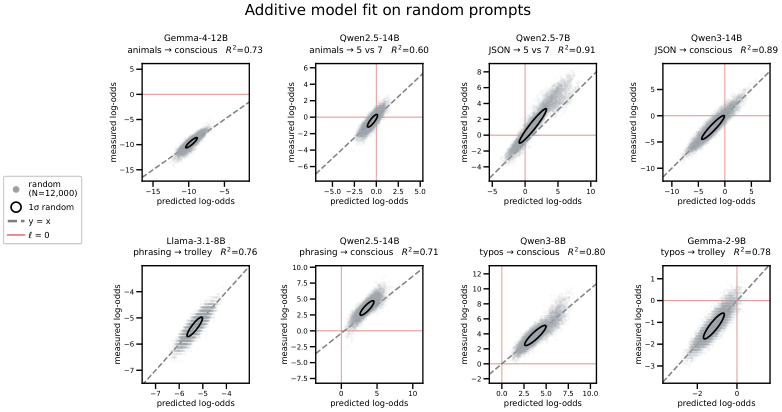
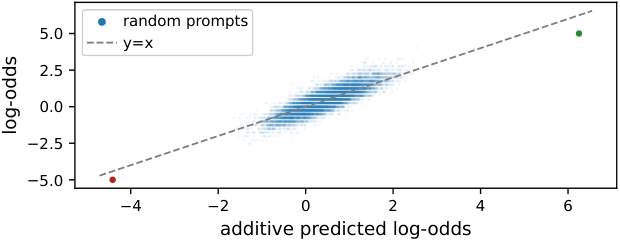
Boix-Adsera and Tessler demonstrate that LLMs can be reliably controlled through the accumulation of individually weak, inconspicuous textual signals — things like paraphrases and typos that would never trip a content filter or raise a human reviewer’s eyebrow. The core finding: these micro-signals combine additively, meaning their effect stacks, and the aggregate can strongly redirect model behavior. The phenomenon is not model-specific: it occurs “across model families and scales,” explicitly including frontier reasoning models — so yes, this includes the expensive ones. Critically, hypnotic prompts transfer between models, which means an adversary who reverse-engineers an exploit on a cheap open model may get it for free on your production system. Because the control mechanism lives in ordinary-looking text choices, it presents what the authors describe as a “major hurdle” for AI interpretability and opens new vectors beyond what traditional prompt injection vs. jailbreak defenses are designed to catch.
Cold read
The abstract claims “strong control” but gives no specific numbers — no success rates, no effect sizes, no baseline comparisons — so we cannot yet assess how strong “strong” is or under what conditions it degrades. “Broadly susceptible” is doing a lot of work: we don’t know whether this requires attacker access to the system prompt, the full context, or only the user turn, which matters enormously for real threat modeling. The transferability claim is dramatic, but transfer between which models, at what fidelity, and how far it decays across architectural families is absent from the abstract. “Individually weak cues” that stack additively is a plausible mechanism — it rhymes with known prompt engineering folklore — but the paper may be describing a laboratory effect that requires impractically many signal injections to work at scale in a live system. Until the full paper is stress-tested against realistic multi-turn, RAG-augmented, and high-temperature production setups, the operational severity is genuinely unknown.
What it means for you
- Signal maturity: 2/5 — compelling mechanism, zero published operational metrics
- Who gets hurt: Any company running LLM pipelines that ingest user-supplied text — support bots, document processors, AI coding assistants, and especially multi-agent orchestration stacks where hypnotic signals could cascade across agents
- What breaks if this is true: Your AI content detection and input sanitization stack is blind to it — there is no “bad word” to catch, no obvious adversarial string to blocklist, which means compliance guarantees and safety SLAs written before this paper are underspecified
- Why it might not land: Stacking enough inconspicuous signals to produce strong behavioral control in a real, noisy, multi-turn conversation may require attacker precision that’s hard to maintain; the lab environment is probably cleaner than production
- Watch for: A model vendor publishing a mitigation or a red-team firm publishing a reproducible exploit kit — either one upgrades the signal maturity fast
Forecast as of 2026-08-18
By Q2 2027, at least one major AI vendor (OpenAI, Anthropic, or Google DeepMind) will publish a security advisory or model update specifically addressing additive subliminal prompt effects — OR this result will be quietly absorbed into the existing jailbreak literature without a dedicated response, indicating the operational threat was overstated. We’ll know which by whether “model hypnosis” appears in a vendor changelog.
Source: Model Hypnosis: Strong control of AI via additive subliminal effects — Enric Boix-Adsera, Benedict Tessler. https://arxiv.org/abs/2608.16834v1