The LLM Hallucination Killer That Requires a Math Degree to Deploy
The LLM Hallucination Killer That Requires a Math Degree to Deploy
A researcher just claimed they’ve eliminated unsupported AI outputs entirely — not “reduced,” eliminated. If that’s even half true, it rewires how every high-stakes AI application handles trust. The catch is buried in the architecture, and it’s a big one.
What happened
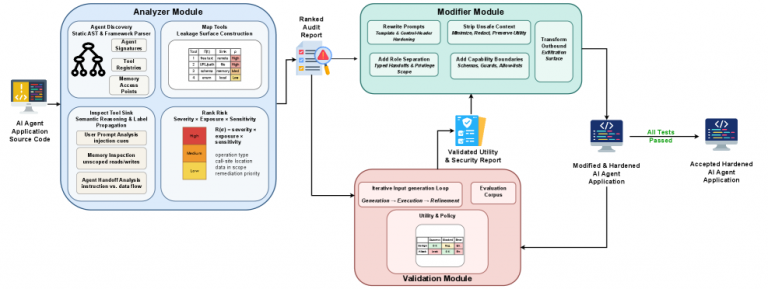
Junyu Ren introduces EG-VAR (Evidence-Grounded Verified Agentic Reasoning), a agentic workflow built on top of Lean 4 — a formal mathematics proof assistant — that acts as a verification layer for LLM tool calls. The core idea: instead of trusting that an LLM used a tool correctly, every output that gets stamped “Verified” must structurally trace back to an attested tool call AND pass a kernel-checked proof chain. Anything that can’t be proven gets labeled “Abstain” with a replayable audit trail rather than fabricated. On a 120-item numerical reasoning subset of TableBench, EG-VAR scored 120/120 versus a 95% same-tool baseline — the perfectionism is the point. On counterfactual stress tests across five domains and two models, EG-VAR held 100% source attribution faithfulness while same-tool baselines dropped to 80–90% and no-tool baselines collapsed to 50–80%. Residual error comes from “semantic formalization” — translating natural language claims into formal logic — running at 3.3% on Claude Sonnet and 1.7% on Opus. The paper frames the whole thing as a “technical-governance interface,” not a product.
Cold read
The n=120 test set is small enough to fit in a decent spreadsheet, drawn from a subcollection of TableBench — the cherry-picking surface area here is real. Numerical reasoning tasks are the easiest possible domain for formal verification; the architecture’s claims become dramatically harder to evaluate on open-ended qualitative inference, legal reasoning, or anything with contested source authority. The 100% faithfulness number is achieved partly by design: the system abstains rather than hallucinating, so the metric rewards refusal, not comprehension. That 3.3%/1.7% semantic formalization error is the real governing constraint — it means a human or a very capable LLM still has to translate every claim worth verifying into Lean 4 syntax, which is a steep ongoing tax on any production deployment. The paper explicitly calls this a “technical-governance interface,” which is academic for “not a drop-in solution.”
What it means for you
- Signal maturity: 2/5 — single-author preprint, tiny benchmark, no production validation
- Who gets hurt: AI compliance and legal-tech startups selling hallucination mitigation via RAG alone; this paper argues retrieval without formal proof is still ungovernable
- What breaks if this is true: The “just cite your sources” approach to AI trust collapses — faithfulness vs. groundedness becomes a hard engineering problem, not a prompt problem
- Why it might not land: Lean 4 formalization is a specialist skill; the marginal cost of deploying this in domains beyond structured numerical data is prohibitive for most teams
- Watch for: Enterprise AI governance vendors (Glean, Vectara, Harvey) shipping “proof sidecar” or formal verification integrations — that’s the signal this architecture is leaving academia
Forecast as of 2026-07-15
By Q3 2027, at least one AI governance or legal-tech vendor will ship a commercially marketed “formal verification layer” for agentic outputs citing this lineage — but it will cover fewer than 15% of real-world enterprise query types, making the “hallucination eliminated” framing quietly obsolete in production use cases.
Source: Evidence-Grounded Verified Agentic Reasoning: A Path Toward Eliminating LLM Hallucination in Empirical Inference via Tool-Attested Kernel Proofs — Junyu Ren. https://arxiv.org/abs/2607.12650v1