Enterprise AI Adoption Is Real, Uneven, and Still Figuring Itself Out
Enterprise AI Adoption Is Real, Uneven, and Still Figuring Itself Out
The biggest dataset yet on how companies actually use ChatGPT at work just dropped — and the headline isn’t disruption, it’s dispersion. Seventeen million messages across 1,500+ organizations, and the clearest finding is that nobody has cracked the code yet.
What happened
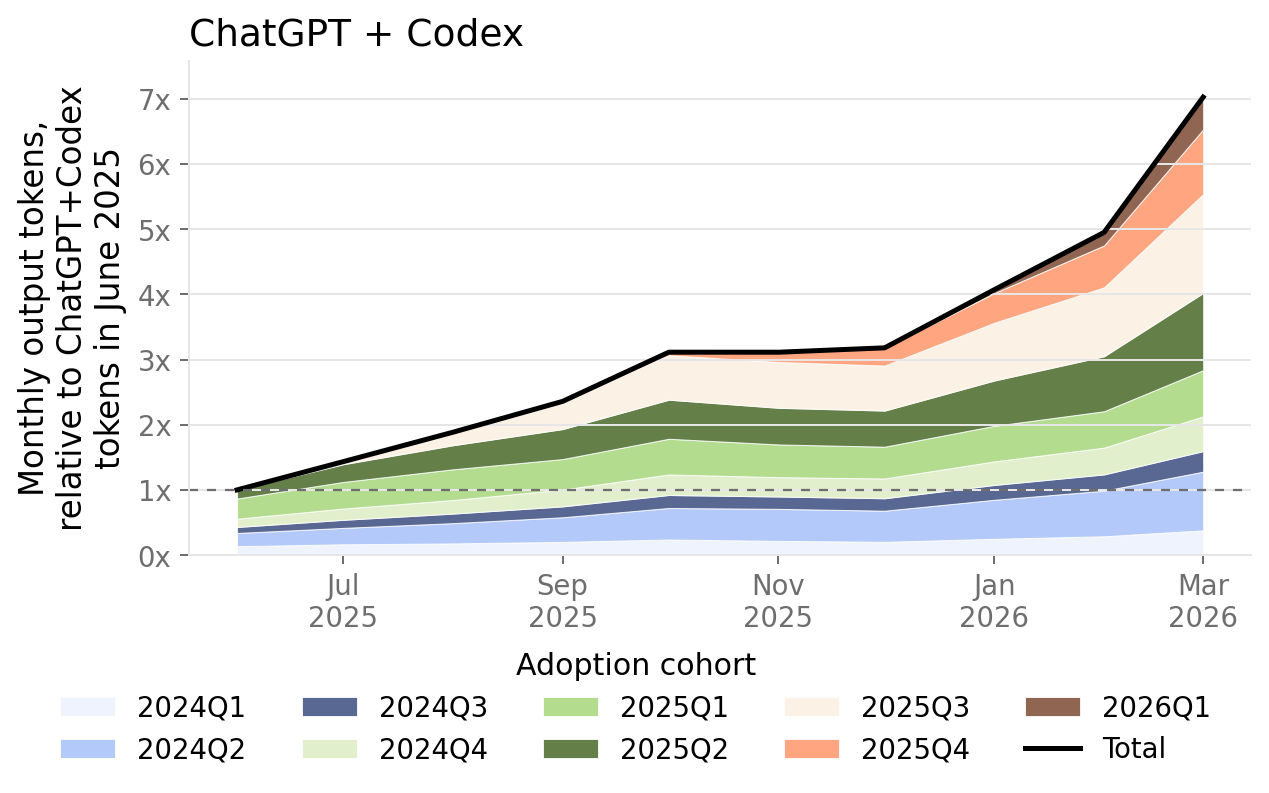
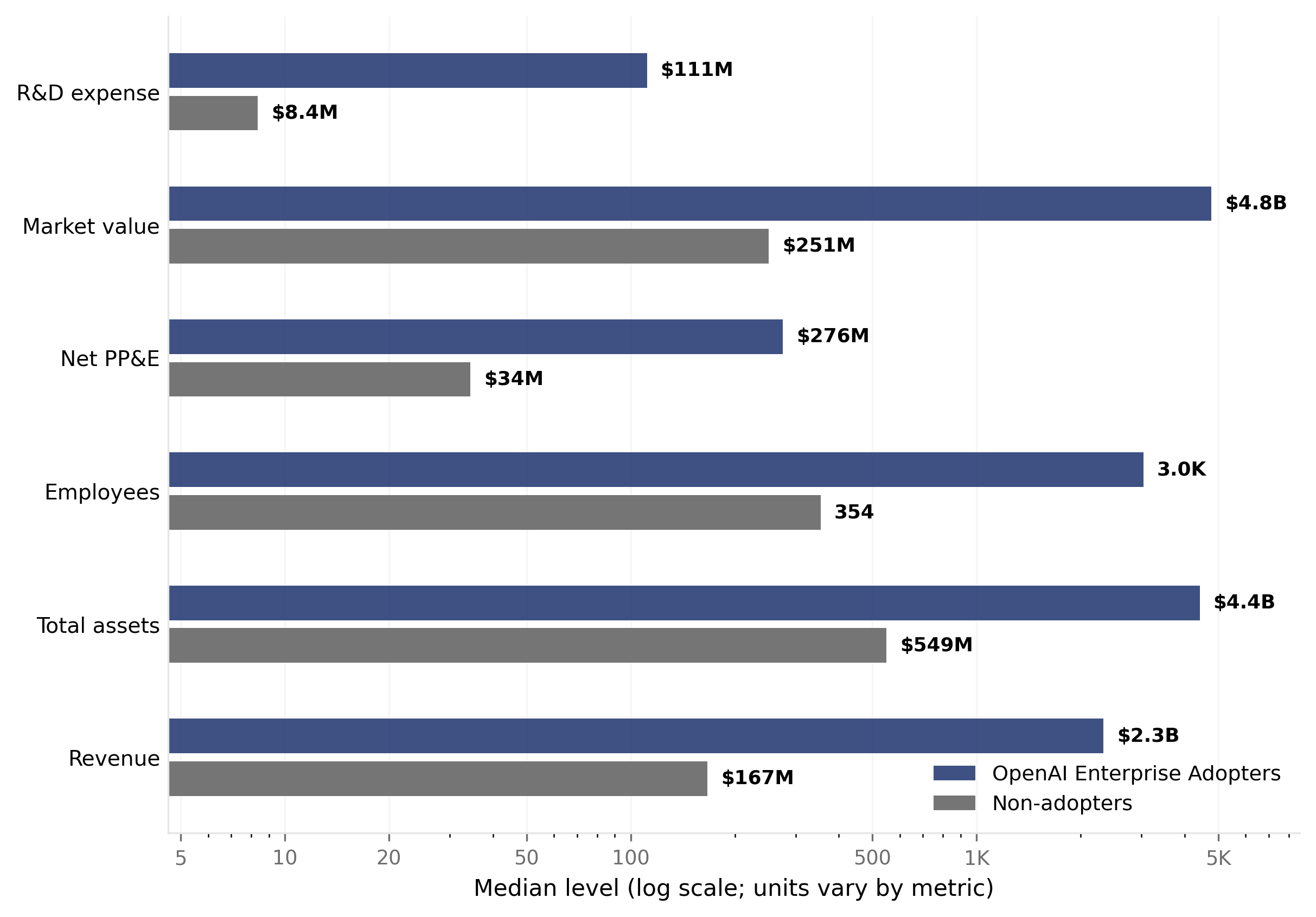
A team of economists linked ChatGPT Enterprise account records to worker roles, task classifications, and public-company financials through March 2026, producing what is likely the largest empirical look at enterprise large language model adoption to date. The worker-level sample at the six-month adoption horizon covers over 1,500 organizations and 17 million messages — not surveys, not self-reports, actual usage logs. Four findings stand out. First, growth is driven by both new firm adoption and intensifying use among existing adopters — not a plateau. Second, adoption among U.S. public companies skews heavily toward larger, more valuable, R&D-heavy, and SG&A-intensive firms — meaning lean operators and SMBs are mostly watching from the sideline. Third, early-career workers show especially high usage intensity, suggesting AI is landing first with the people who do the most prompt engineering by necessity: junior staff executing knowledge tasks. Fourth, the task mix is broad — writing, technical work, communication, information synthesis — without a dominant killer workflow emerging. The authors’ own conclusion: firms are “still actively learning how to integrate AI into organizational workflows.”
Cold read
This is observational data on one platform (ChatGPT Enterprise), so any conclusions about “enterprise AI adoption” writ large carry selection bias — OpenAI’s customers are not all enterprises, and enterprises are not all OpenAI customers. Message volume is not value created: 17 million messages tells you people are typing, not that anything useful came out. The concentration finding — larger, R&D-heavy, SG&A-heavy firms adopt faster — almost certainly reflects procurement power and legal clearance, not AI sophistication; a Fortune 500 can sign an enterprise contract, a 40-person startup cannot. The paper explicitly stops short of linking usage intensity to any financial or productivity outcome, so the causal story founders want (“AI → revenue”) is entirely absent from the data. And the early-career usage spike could mean junior workers are the most willing experimenters or that managers are quietly offloading grunt work without institutional strategy — the data can’t distinguish.
What it means for you
- Signal maturity: 3/5 — Real data, real scale, but no outcome linkage
- Who gets hurt: Mid-market SaaS vendors selling “AI transformation” to SMBs — the adoption skew toward large, resource-rich firms suggests their core customers aren’t buying in yet
- What breaks if this is true: The “AI levels the playing field for small companies” narrative fractures; procurement friction and legal risk tolerance are moats that LLMs don’t dissolve
- Why it might not land: Adoption curves compress fast — the large-firm-first pattern may be a 12-month lag, not a structural divide; SMB adoption could accelerate sharply as wrapper products mature
- Watch for: A follow-on paper or OpenAI disclosure linking enterprise usage intensity to measurable firm-level outcomes (revenue per employee, churn, R&D output) — that’s the data that would actually change capital allocation decisions
Forecast as of 2026-08-13
By Q2 2027, at least one major HR or productivity software vendor will cite this class of usage-log research to justify workforce reduction among early-career knowledge workers — not because the paper supports that conclusion, but because executives will read “high early-career usage intensity” and draw the wrong inference; expect public pushback and at least one high-profile case study that complicates the narrative.
Source: How Organizations Use AI: Evidence from ChatGPT — Aaron Chatterji, David Holtz, Neel Rakholia, Prasanna Tambe, Gawesha Weeratunga. https://arxiv.org/abs/2608.12236v1