Your Long-Context GPU Bill Just Became Optional
Your Long-Context GPU Bill Just Became Optional
Every startup paying for million-token inference is paying a GPU memory tax that may now be negotiable. A new compression system claims 4.8× lower decode latency and 7.3× higher throughput — without falling off an accuracy cliff. If that holds, the economics of long-context serving just shifted.
What happened
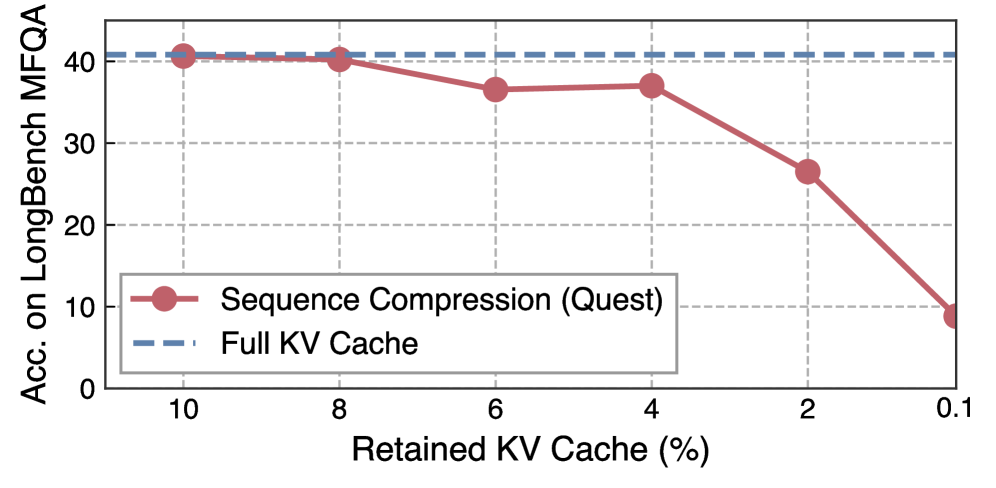
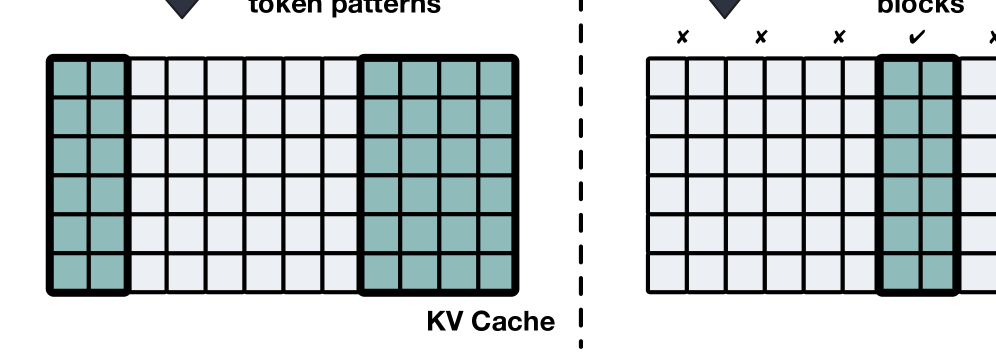
Researchers from a Shanghai-based academic group built MosaicKV, a system that compresses the KV cache along both the sequence dimension (which tokens you keep) and the channel dimension (how many features per token you keep) simultaneously. The key insight: prior work compressed only one axis, and joint compression naively causes accuracy collapse. MosaicKV avoids this by treating the cache as non-uniform — it identifies high-importance elements at the segment level and applies different compression strategies to different segments rather than one global pattern. Tested on an H800 GPU across multiple LLMs, the system delivered up to 16× attention speedup, 3× memory reduction, 4.8× lower decode latency, and 7.3× higher throughput versus an uncompressed baseline. The accuracy cost on LongBench and RULER benchmarks averaged just 1.76% — a number that, if it survives contact with production, is genuinely small for 3× memory savings. This matters because the context window has become the primary cost vector for document-heavy applications: RAG pipelines, legal review, code analysis — anything feeding hundreds of thousands of tokens per request.
Cold read
The 1.76% average accuracy loss is reported on LongBench and RULER — both standard but well-known benchmarks with known benchmark contamination risk, and neither maps cleanly to your specific production task. “Average” loss masks worst-case task degradation; a retrieval-heavy task could lose far more than 1.76% while a summarization task loses nothing, and you won’t know which side you’re on until you measure. All numbers come from a single H800 GPU setup — there is no multi-GPU, multi-node, or mixed-precision data in the abstract, so inference about distributed serving efficiency is speculation at this stage. The “underutilized GPU and CPU resources” mechanism sounds elegant but is highly sensitive to actual workload patterns; a batch-heavy production environment may have far less slack than a benchmark harness. Finally, “up to 16× attention speedup” is an “up to” number — the floor of that distribution is undisclosed.
What it means for you
- Signal maturity: 2/5 — single-GPU academic benchmark; no production deployment evidence
- Who gets hurt: Inference infrastructure vendors (Together, Fireworks, Modal) whose margin pitch partly rests on proprietary serving efficiency; if open-source systems absorb this, the moat shrinks
- What breaks if this is true: The economic case for buying more GPU memory to handle long-context scale weakens — CapEx budgets shift toward compute rather than memory capacity, and memory-bandwidth-optimized hardware bets look less certain
- Why it might not land: Fine-grained segment-level compression management introduces implementation complexity and potential latency variance that CI/CD pipelines and SLA-bound APIs will not tolerate without months of hardening
- Watch for: Adoption into vLLM or SGLang as a merged PR — that is the signal that practitioners have stress-tested the system beyond a paper’s benchmark harness
Forecast as of 2026-07-02
By Q1 2027, at least one major open-source inference framework (vLLM, SGLang, or TGI) will ship a two-dimensional KV cache compression feature — but real-world accuracy-vs-throughput tradeoffs reported by operators will show at least one task category where accuracy degradation exceeds 5%, cooling the hype within two quarters of release.
Source: MosaicKV: Serving Long-Context LLM with Dynamic Two-D KV Cache Compression — Sheng Qiang, Ruiwei Chen, Yinpeng Wu, Jinyu Gu, Zhichao Hua, Yubin Xia, Binyu Zang, Haibo Chen. https://arxiv.org/abs/2607.00760v1